
Look refreshed, not frozen! Botox® treatment, skillfully administered, in Perrysburg and Fremont, OH
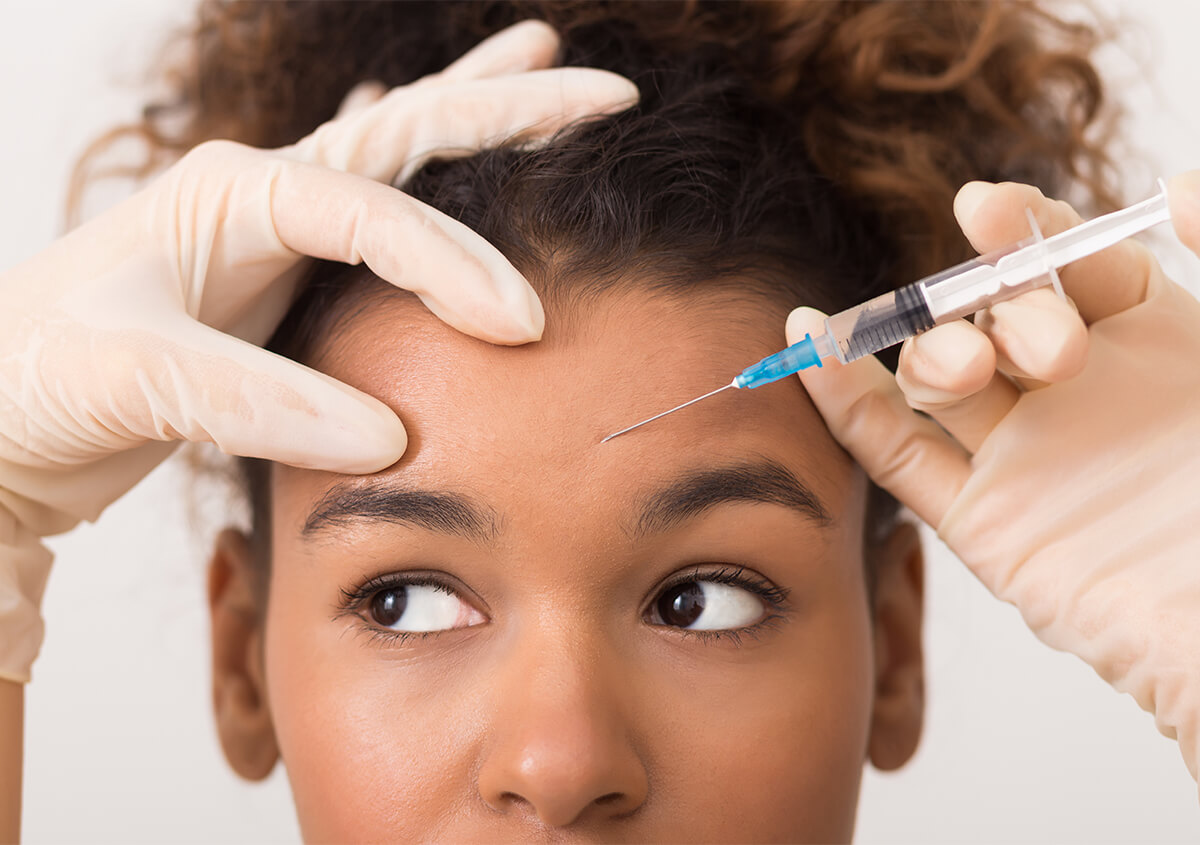
Botox®, Xeomin®, Dysport® and Jeuveau are known as neuromodulators. They are safe and commonly used to treat fine lines, wrinkles or “expression lines.” Expression lines arise over time due to the repeated act of expressing oneself; for instance, repeated squinting can produce “crow’s feet” around the eyes. Likewise, repeated frowning can create the vertical “11 lines” between the eyes and the horizontal lines on your forehead. When injected into the correct muscle points beneath the skin, the active ingredient in neuromodulators block the nerve signals that “tell” your facial muscles to contract. A muscle that does not contract and remains relaxed cannot make a line or fold.
WHAT TO EXPECT, PLUS THE BENEFITS
These FDA-approved neuromodulator can be used to treat:
- Frown lines on the forehead
- Lines between the brows
- Crow’s feet (eyelid smile lines)
- Bunny lines (sides of nose)
- Smoker’s lines (vertical lines around the mouth)
- Chin dents
- Neck lines
Botox® and other neuromodulator injection sessions are quick and well tolerated by most patients. Botox® represents an actual “no-downtime” procedure. Most people can return to work or other activities without anyone being able to tell the procedure was done. Rarely, minor and temporary swelling, redness, and bruising may be noted. It may take 7-14 days to see full results from your neuromodulator treatment which may last 3-4 months. At Mitchell Dermatology, we take pride in the accurate and skillful administration of all neuromodulators. With precise application, you will still be able to express yourself. You will look refreshed, not “frozen” and as vibrant as you feel.
Contact us today at our practices in 419.871.3737 (Perrysburg) and 419.871.3636 (Fremont) to schedule your appointment. We are happy to answer any questions you may have, including which neuromodulator may be best for you!
WATCH TO LEARN more about Botox® treatment.
FAQs
How long does Botox last for you?
The duration of Botox results varies among individuals, but typically, the effects last around three to four months. Maintenance treatments are often needed to sustain the smoothing effects on wrinkles and fine lines.
Can you stop Botox once you start?
Yes, you can stop Botox treatments once you start. The effects of Botox are not permanent, so if you decide to discontinue treatments, your muscles will gradually regain their normal function, and wrinkles may return over time.
What is the best age to start Botox?
The best age to start Botox depends on individual factors such as skin condition and personal preferences. Generally, individuals in their late 20s to early 30s may consider Botox to prevent and minimize the appearance of wrinkles. However, it’s best to consult a dermatologist to determine whether Botox is appropriate for you.
Request an Appointment

Hope Mitchell, MD, is the founder and medical director of Mitchell Dermatology and an Ohio board-certified medical and cosmetic dermatologist. Dr. Mitchell has 25 years of expertise in the field. She is prepared to meet every skin care need with a personalized, one-of-a-kind treatment plan that you deserve.